For many people, September marks a return to more demanding routines: long hours on your feet, wearing closed shoes, intense work schedules, or going back to school.
This change in context can affect the integrity and comfort of the skin on the feet, making complaints such as excessive sweating, peeling, fissures, odour, and nail changes more frequent.
While summer is dominated by factors such as heat, sun, seawater, and wearing open footwear, in September the conditions created by prolonged use of closed footwear and the lack of daily preventive care become more relevant.
Closed footwear: a warm, humid microenvironment
Closed shoes, especially when worn for many consecutive hours, can create a warm, humid environment, particularly when there is excessive sweating or poor ventilation.
This context can promote:
- Moisture build-up
- Imbalance of the skin’s microbial flora
- Maceration between the toes
- Unpleasant odour
- Friction and repeated microtrauma
- Skin discomfort
- Greater vulnerability to fungal issues in predisposed people
Wearing closed footwear does not, in itself, cause an infection. However, persistent moisture, heat, lack of thorough drying, and daily reuse of the same pair can create favourable conditions for the development or recurrence of fungal issues.
These factors are particularly relevant in older adults, people with diabetes, athletes, and professionals who spend long hours on their feet or in closed footwear.
The importance of skin hydration
Wearing closed footwear does not mean all the skin on the feet becomes moist. It is possible to have moisture between the toes and, at the same time, dryness or thickening on the sole and heels.
Friction, temperature changes, and irregular hydration can contribute to:
- Plantar dryness
- Skin thickening
- Loss of elasticity
- Roughness
- Formation of microfissures
These changes are often underestimated, but they can become clinically relevant. Fissures, especially when deep, compromise the skin barrier and can act as an entry point for external agents.
That’s why it’s important to distinguish the areas that need moisture control from those that need hydration and protection.
A three-step preventive routine with BioFeet®
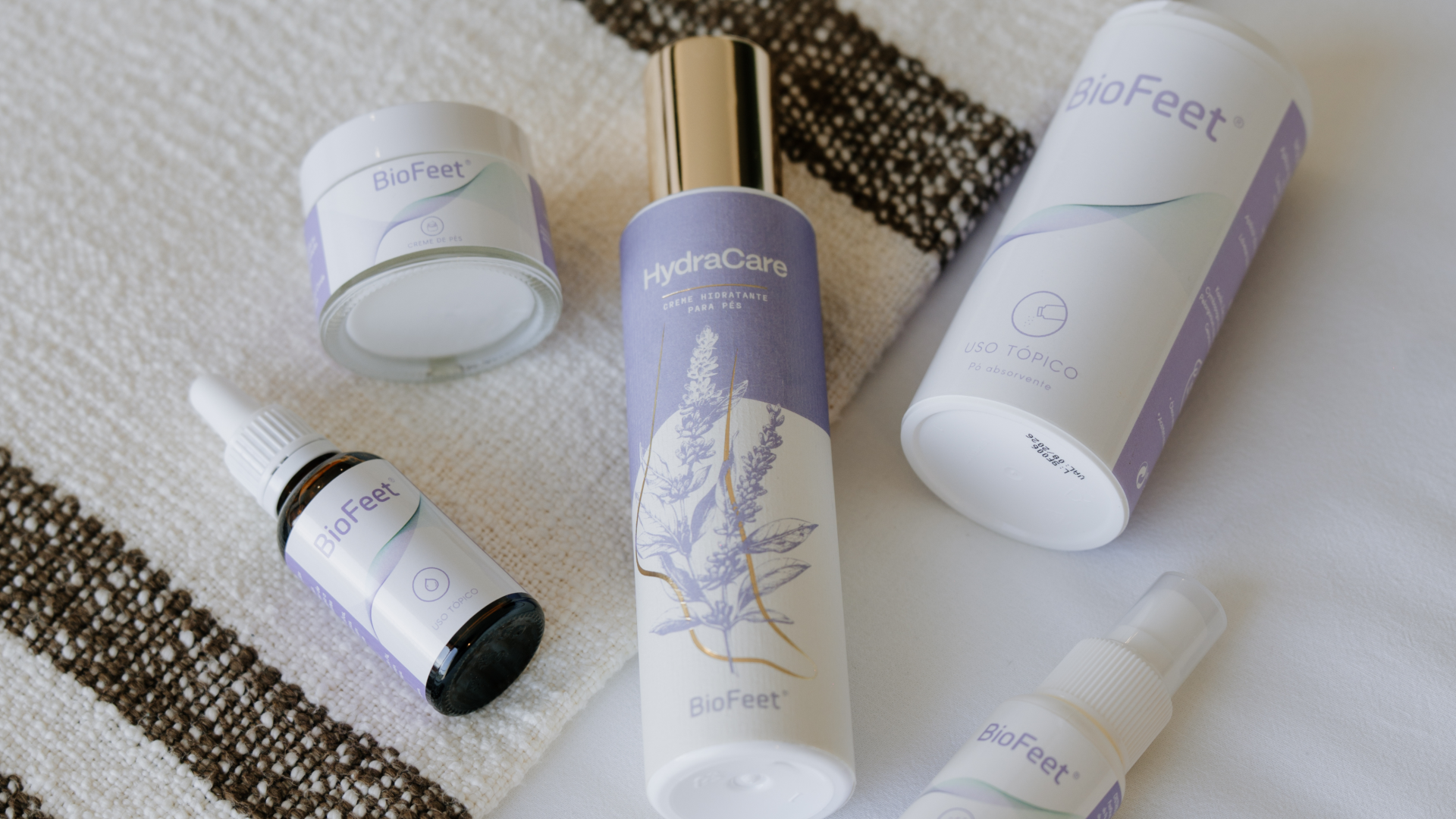
BioFeet® proposes a complementary approach based on moisture control, skin protection, and daily hydration.
Product choice should be adapted to the condition of the skin and each person’s needs, and using all three steps at the same time is not mandatory.
1. Moisture and odour control with BioFeet® Powder
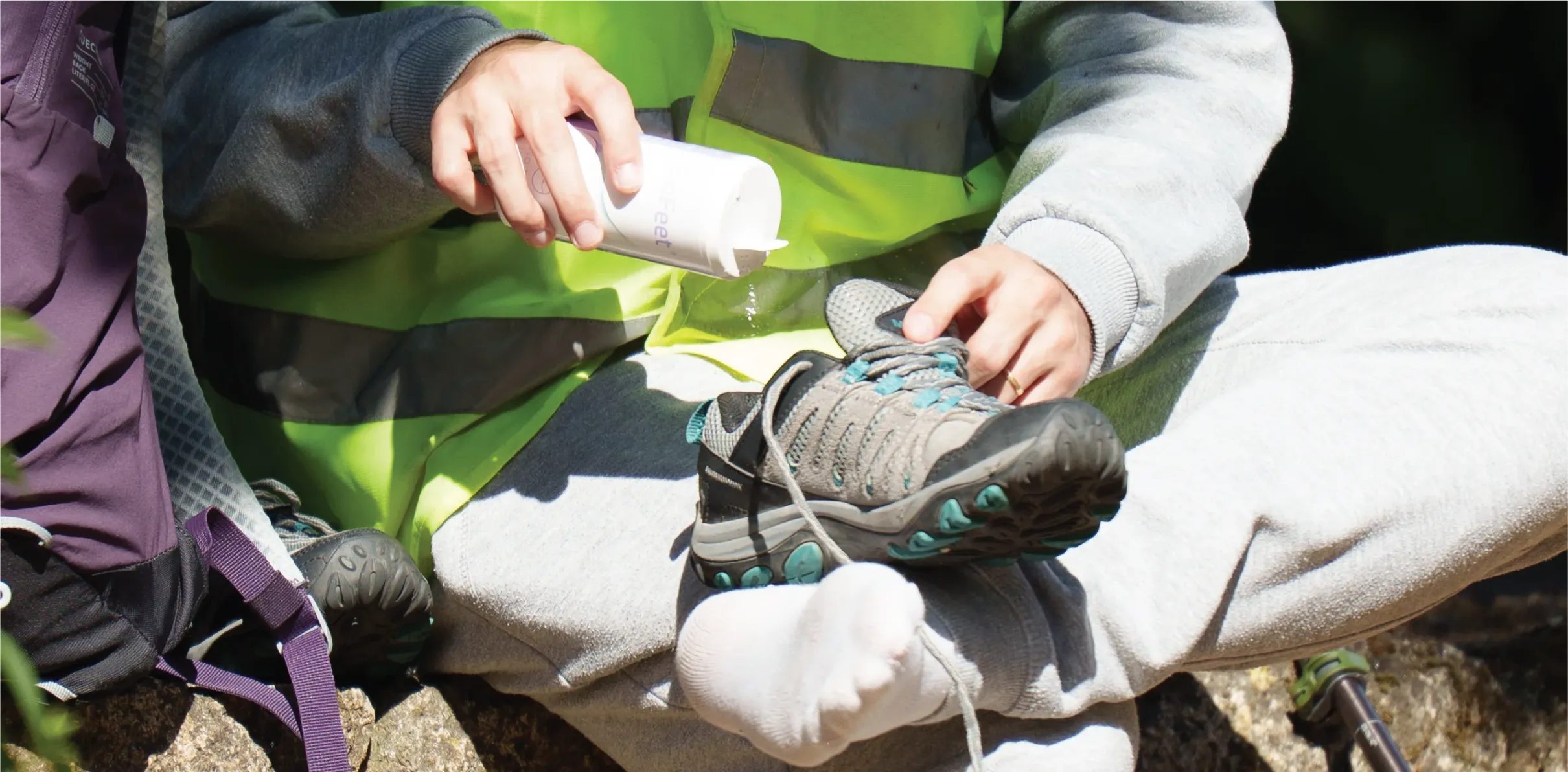
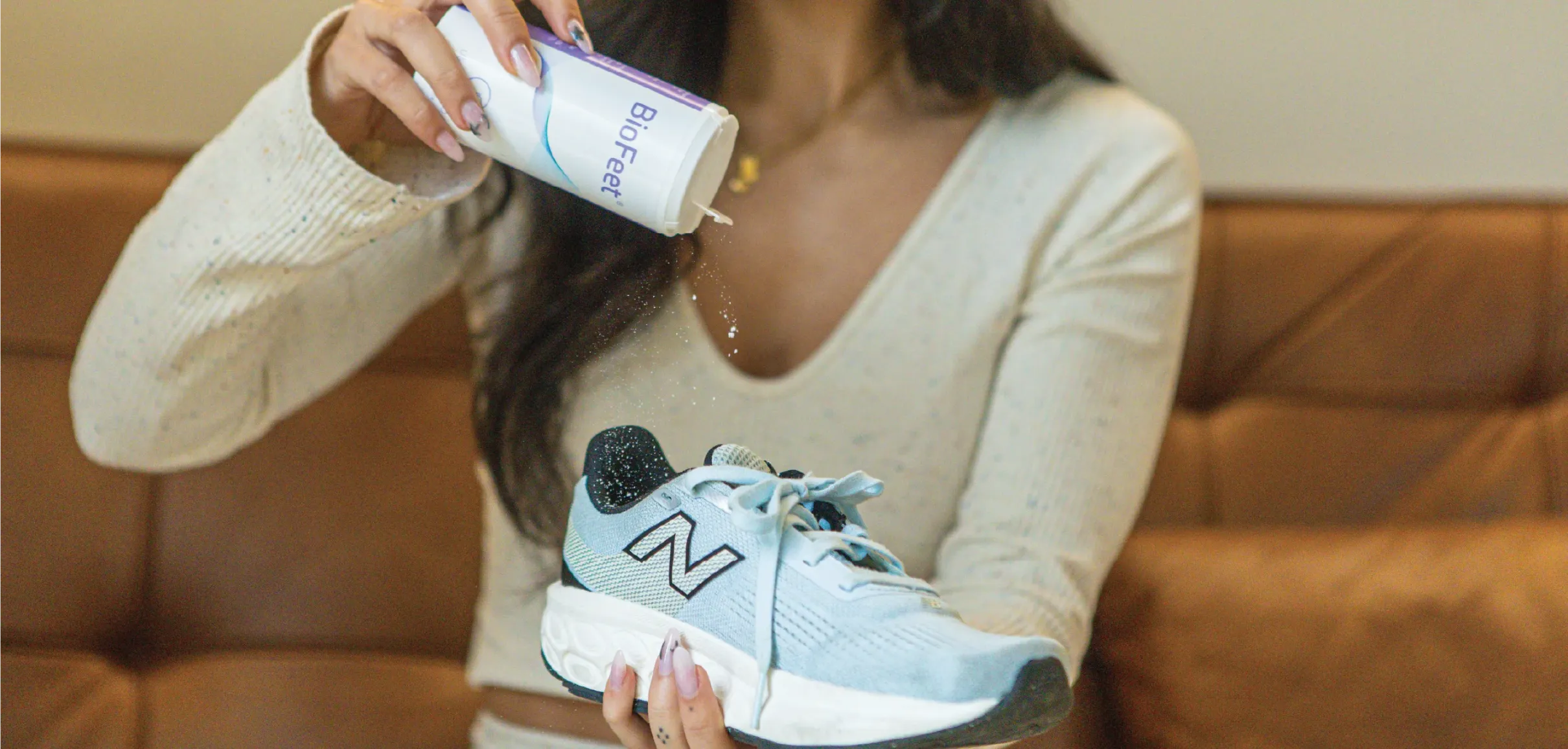
With a talc- and aluminium-free formula, BioFeet® Powder can be integrated into your routine to:
- Absorb excess perspiration
- Help control moisture
- Provide a deodorising effect
- Support the balance of the microbial flora
- Keep the inside of footwear drier
- Improve comfort throughout the day
It can be applied directly to the feet, to socks, or inside footwear, according to the directions for use.
The product should complement a routine that includes careful washing and drying of the feet, changing socks, and alternating footwear.
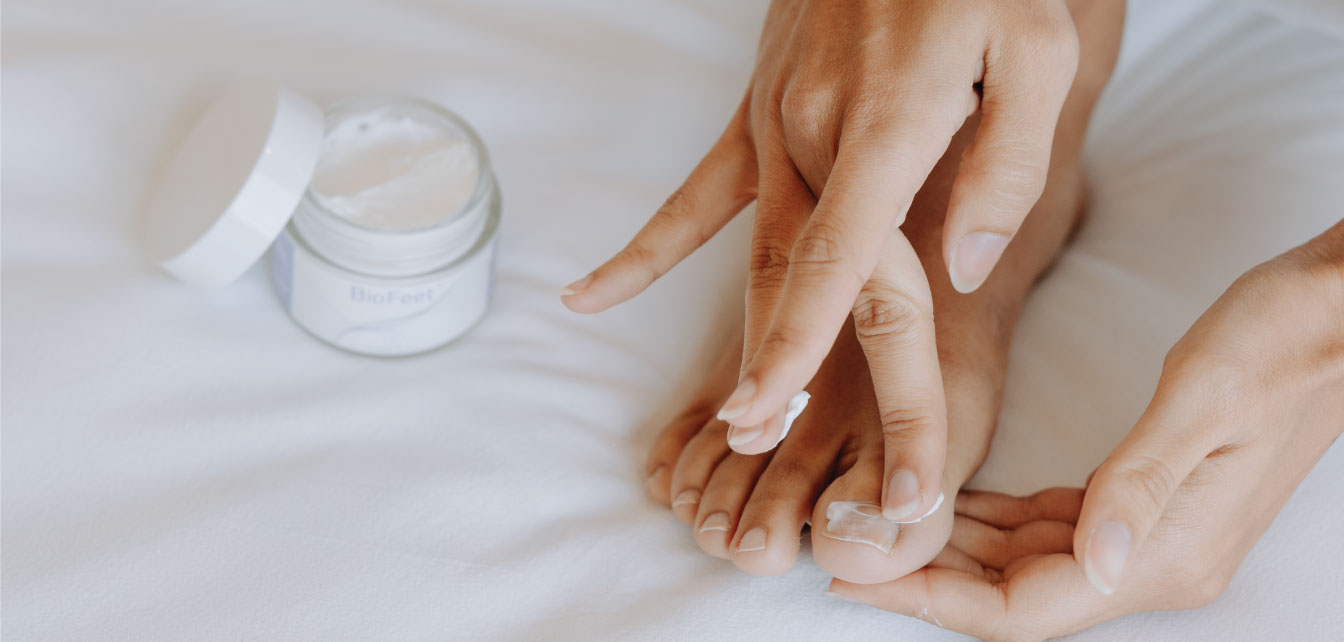
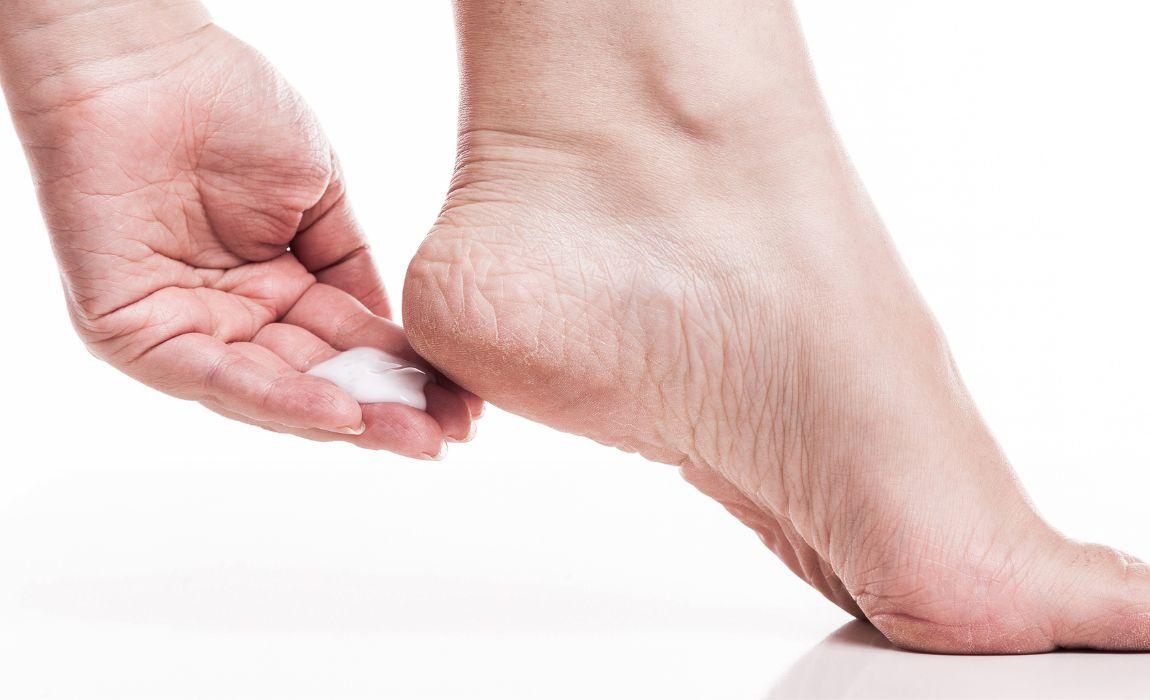
2. Nourishment and protection with BioFeet® Foot Cream
The combination of ingredients with nourishing and protective action makes it possible to include BioFeet® Foot Cream in the care of:
- Dry skin subject to pressure and friction
- Rough heels or heels with superficial fissures
- Fragile nails or nails with changes
- Space between the nail plate and the nail bed
- Skin and nails during follow-up of podiatry protocols
BioFeet® Foot Cream can complement care associated with nail changes, including during follow-up for onychomycosis, without replacing the diagnosis or treatment defined by the professional.
It should be applied to intact skin, avoiding the spaces between the toes and open wounds.
3. Daily hydration with BioFeet® HydraCare
BioFeet® HydraCare was developed for the daily hydration routine of dry and very dry skin.
With more than 99% ingredients of natural origin, it has a fluid, fast-absorbing texture, without leaving an excessively greasy feeling.
Using it helps to:
- Provide deep hydration
- Improve the comfort of dry skin
- Preserve elasticity
- Reduce the feeling of roughness
- Make it easier to maintain a daily routine
It can be applied after bathing or before putting on footwear, waiting for the product to absorb. Application should focus on dry areas, especially the sole and heels, avoiding the spaces between the toes.
More than applying a large amount occasionally, the most important thing is to maintain regular use adjusted to the skin’s needs.
Foot health starts with routine
September is a good time to resume a preventive and consistent approach to foot care.
Controlling moisture, letting footwear dry, changing socks, hydrating dry areas, and regularly observing the skin and nails are complementary actions that help preserve comfort and skin integrity.
The BioFeet® range offers solutions for different needs, allowing the routine to be adapted to moisture, dryness, and the changes observed in each person.
If you have persistent itching, peeling, deep fissures, pain, wounds, or nail changes, seek an assessment from a professional.
Explore the full range at www.biofeet.pt.