Keratin is an essential protein for the resistance and protection of the skin and nails. However, when there is excessive build-up, areas of thick skin, roughness, flaking, and nail changes may appear.
It is in this context that the selective keratolytic effect can make a difference, helping to remove dead cells and excess keratin without resorting to mechanical aggression of healthy skin.
What is the selective keratolytic effect?
The keratolytic effect corresponds to the ability to soften and facilitate the removal of dead cells and layers of keratin accumulated on the surface of the skin or nails.
When this action is selective, the aim is to act on areas where there is excessive build-up, preserving the integrity of healthy skin.
This approach can be integrated into the care of:
- Thick or rough skin
- Hyperkeratosis
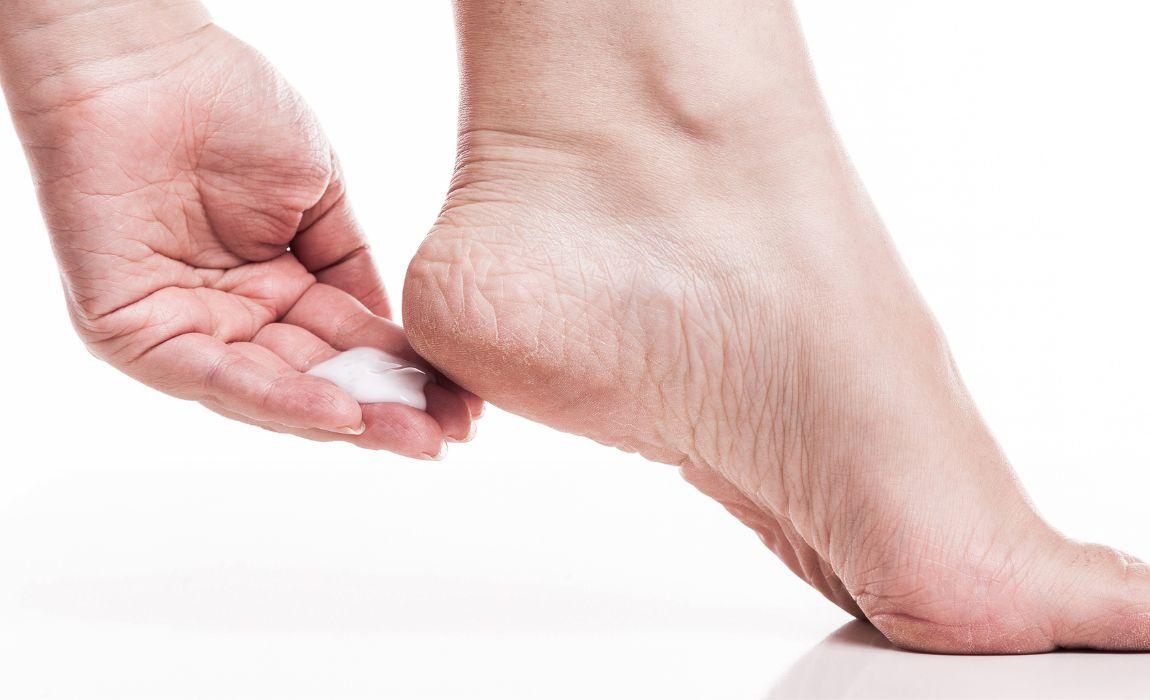
- Hardened heels
- Plantar flaking
- Thick or irregular nails
- Keratin build-up underneath the nail
- Changes associated with podiatric protocols
Keratolytic action does not remove all keratin, as this protein is necessary for the protection of the skin and nails. The aim is to control only the excessive build-up.
Why does keratin build up on the skin and nails?
Keratin production is a natural process. In the feet, this protein helps protect the skin from pressure, friction, and daily contact with footwear.
However, different factors can cause excessive build-up:
- Repeated pressure on specific areas
- Mechanical or structural changes
- Friction caused by footwear
- Dry skin with reduced elasticity
- Repeated trauma to the nails
- Ageing
- Psoriasis
- Fungal changes
- Irregular nail growth
The origin should be identified, especially when the thickening is recurrent, painful, or accompanied by other changes.
How does excess keratin manifest on the skin?
On the skin of the feet, keratin build-up can cause:
- Persistent roughness
- Hard areas to the touch
- Skin thickening
- Whitish heels
- Flaking
- Tightness sensation
- Tendency for cracks
- Discomfort when walking
These changes often appear on the sole, heels, edges of the foot, and other areas subject to pressure.
Aggressive removal with files or cutting instruments can sensitize the skin, cause minor injuries, and stimulate a new protective response.
How does excess keratin manifest on the nails?
On the nails, keratin build-up may be associated with:
- Thickening of the nail plate
- Greater difficulty in cutting
- Irregular surface
- Build-up of debris underneath the nail
- Brittleness
- Detachment
- Discomfort caused by footwear pressure
Yellow, brown, or whitish discolouration may accompany onychomycosis, but can also appear due to trauma, psoriasis, or other changes.
The appearance of the nail does not confirm the presence of fungus. When the change persists, it should be assessed by a professional.
Why is it important to control keratin selectively?
The controlled reduction of excess keratin layers can help to:
- Make the skin more even and comfortable
- Reduce the sensation of roughness
- Prepare the skin for hydration
- Facilitate the care of thick nails
- Improve the preparation of the nail surface
- Complement podiatric protocols
- Avoid aggressive mechanical interventions at home
The keratolytic effect does not directly treat the cause of all these changes. When there is an infection, skin disease, or mechanical change, it is also necessary to act on its origin.
Discover the selective keratolytic effect of BioFeet® Drops
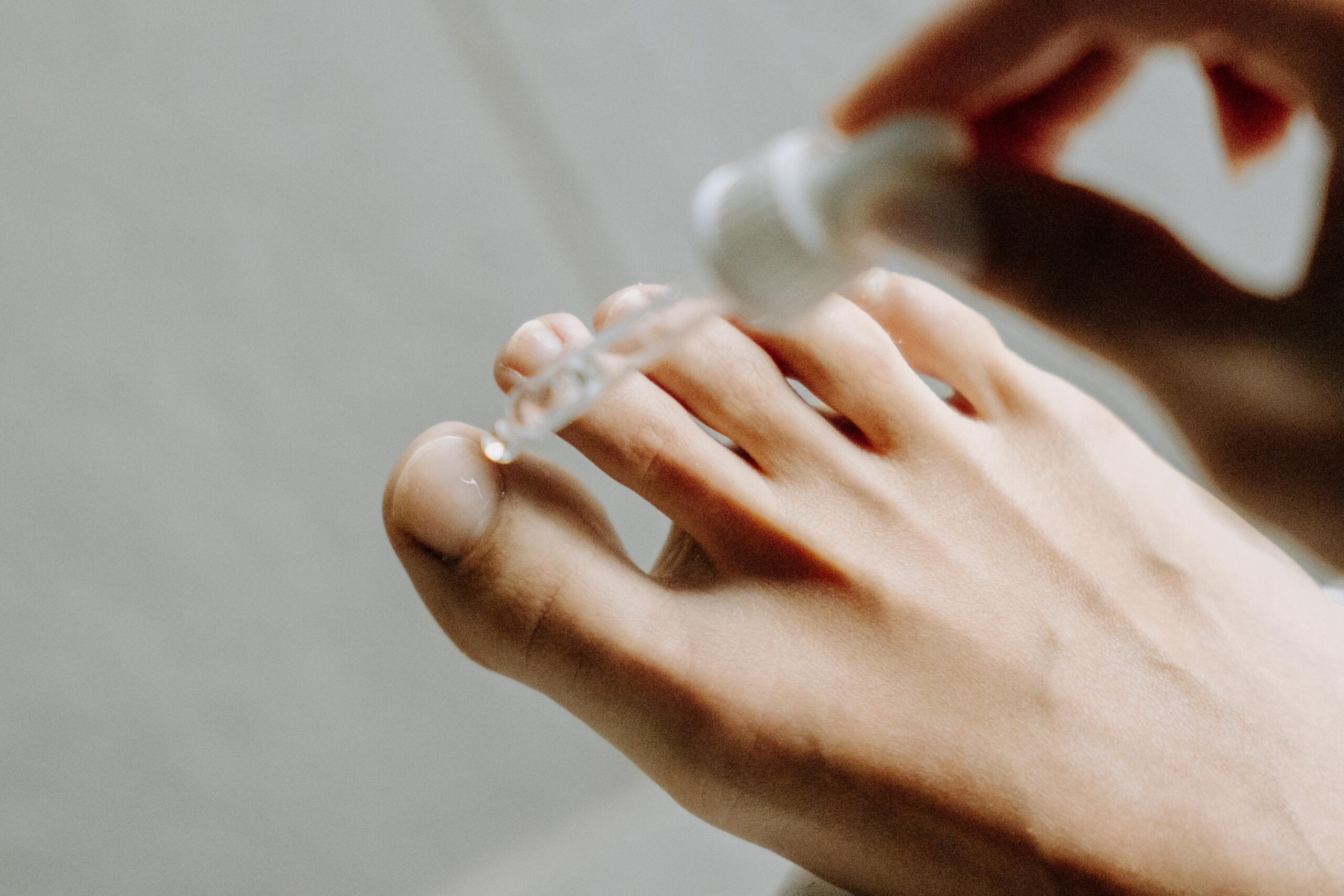
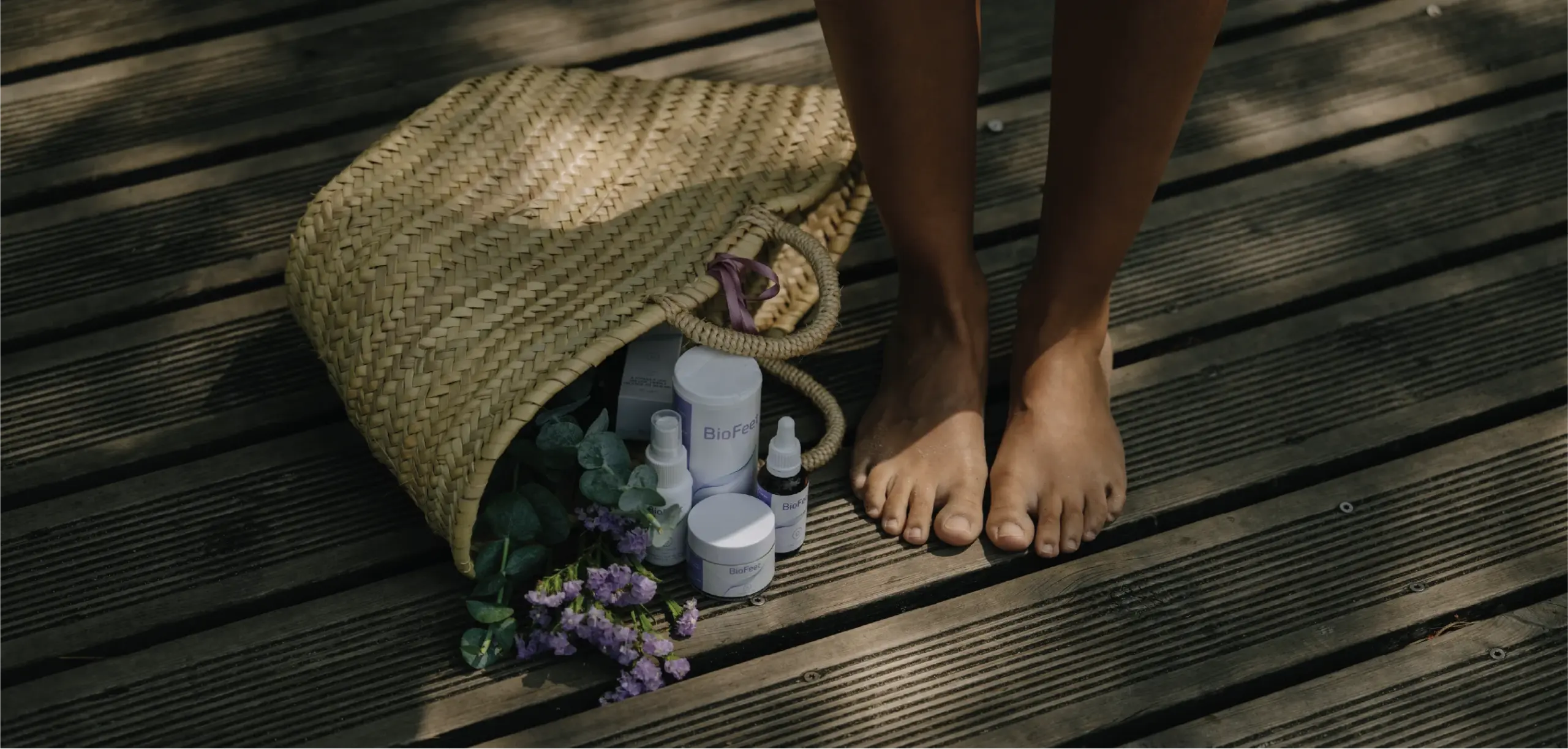
The BioFeet® Drops has a selective keratolytic action that helps naturally remove dead cells and control excess keratin layers, preserving healthy skin.
Its use can contribute to:
- Reduce the build-up of dead cells
- Control excess keratin
- Soften areas of thick skin
- Care for thickened or irregular nails
- Support skin pH balance
- Prepare the skin and nails for subsequent care
- Complement protocols associated with fungal changes
BioFeet® Drops does not replace the diagnosis or treatment of onychomycosis, plantar wart, or other clinical condition. Its keratolytic action can be integrated as a complement to the routine defined by the professional.
Why choose BioFeet® Drops?
- Selective action: acts on dead cells and excess keratin
- Gentle care: avoids aggressive mechanical removal of the skin
- Localized application: allows action on specific areas
- Extensive application: can be used in a foot soak
- Versatile use: adapts to skin and nail needs
- Integration into protocols: complements different podiatric care
How to apply BioFeet® Drops?
The application should be chosen according to the extent of the area:
- Direct drop: indicated for localized areas of the skin or nails
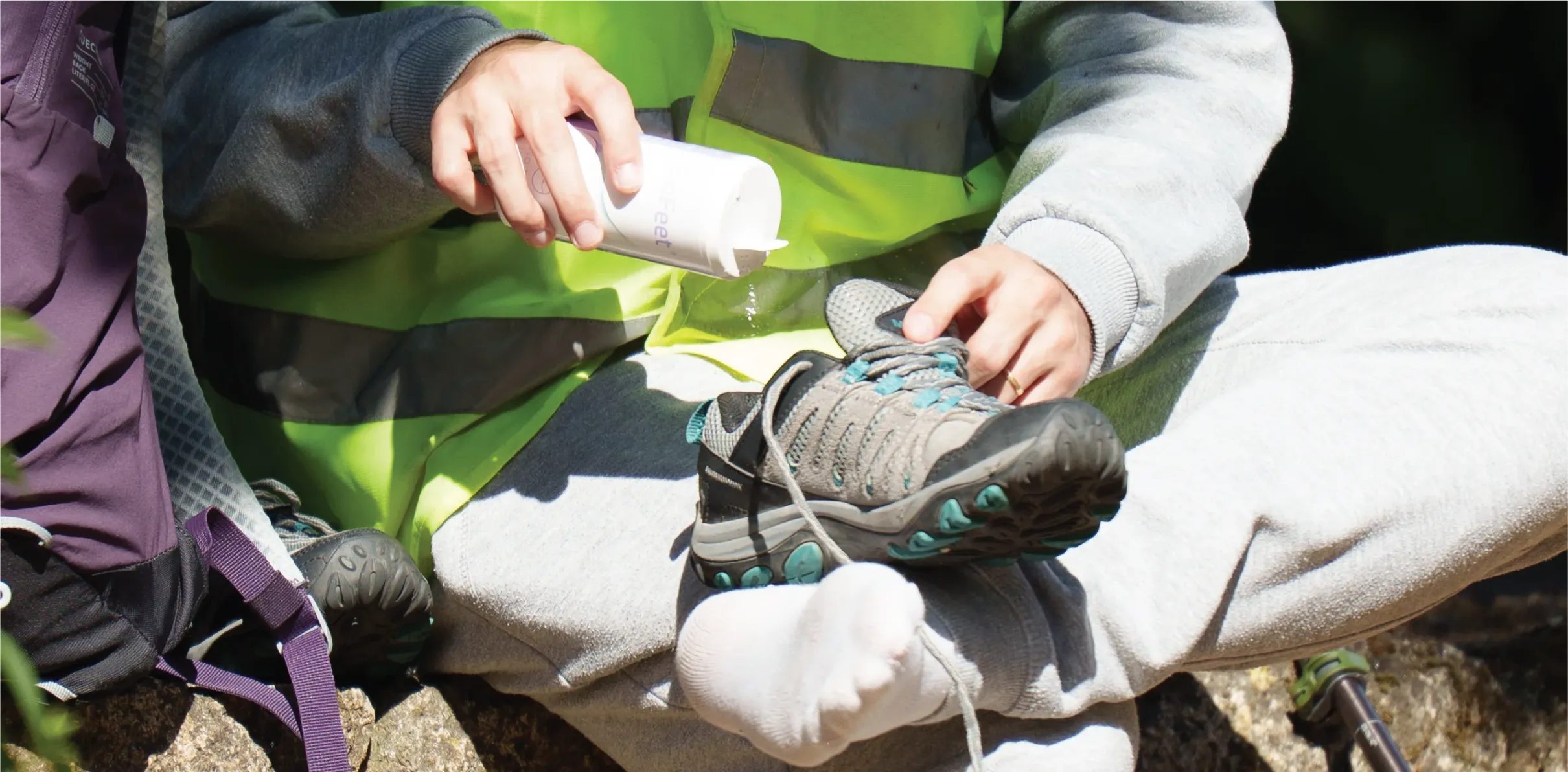
- Foot soak: indicated when a more uniform application is desired on extensive areas of the feet
To perform the foot soak, 20 drops should be added to one litre of water. The feet should remain in the solution for 10 minutes, preferably at the end of the day.
The frequency and duration of use should respect the instructions on the packaging or the professional’s guidance.
BioFeet® Drops and BioFeet® Spray should not be used simultaneously.
When to seek a Podiatrist?
Seek professional assessment in the presence of:
- Thick skin that reappears frequently
- Pain when walking
- Deep cracks
- Inflammation or wounds
- Significant thickening of the nails
- Persistent colour change
- Nail detachment
- Suspected onychomycosis or plantar wart
- Difficulty cutting the nails
- Diabetes, circulatory changes, or reduced sensitivity
Selective care for the skin and nails
The selective keratolytic effect helps control the build-up of dead cells and keratin, preserving the integrity of healthy skin.
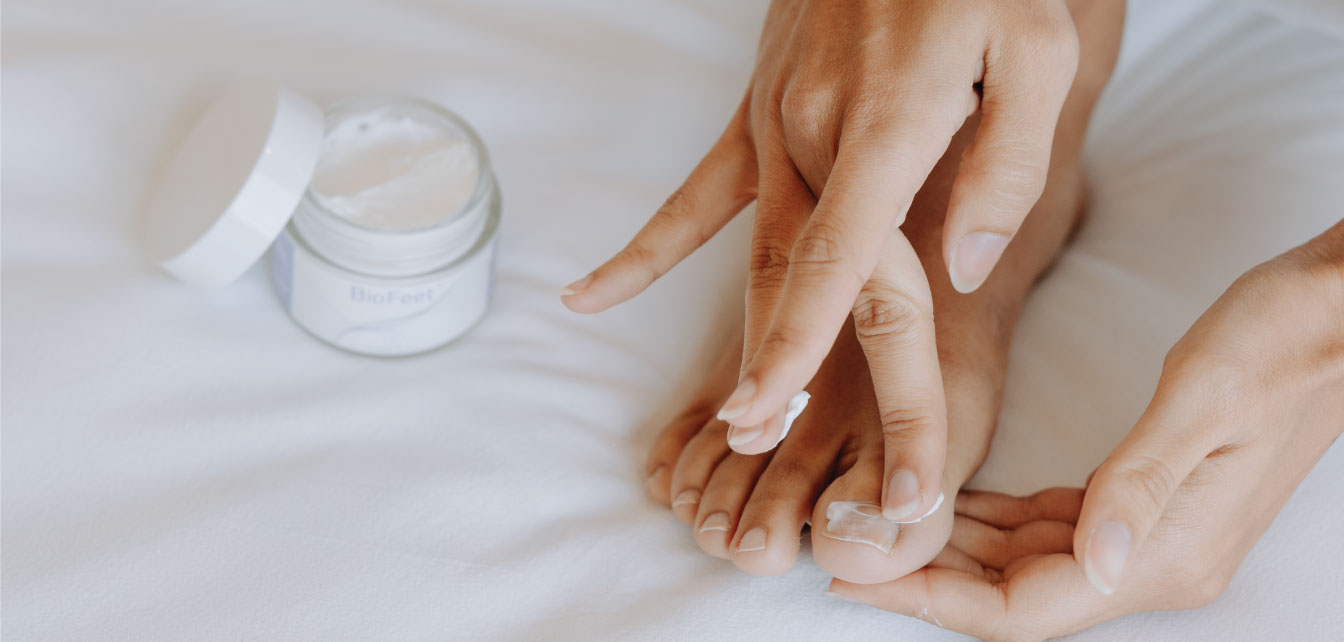
Through its two forms of application, BioFeet® Drops can be integrated into the care of localized areas, extensive areas of the feet, and nails with keratin build-up.
The most important thing is to adapt the routine to the origin and extent of the change, avoiding aggressive interventions and seeking professional guidance whenever necessary.