
BioFeet® Foot Powder
15,90 €


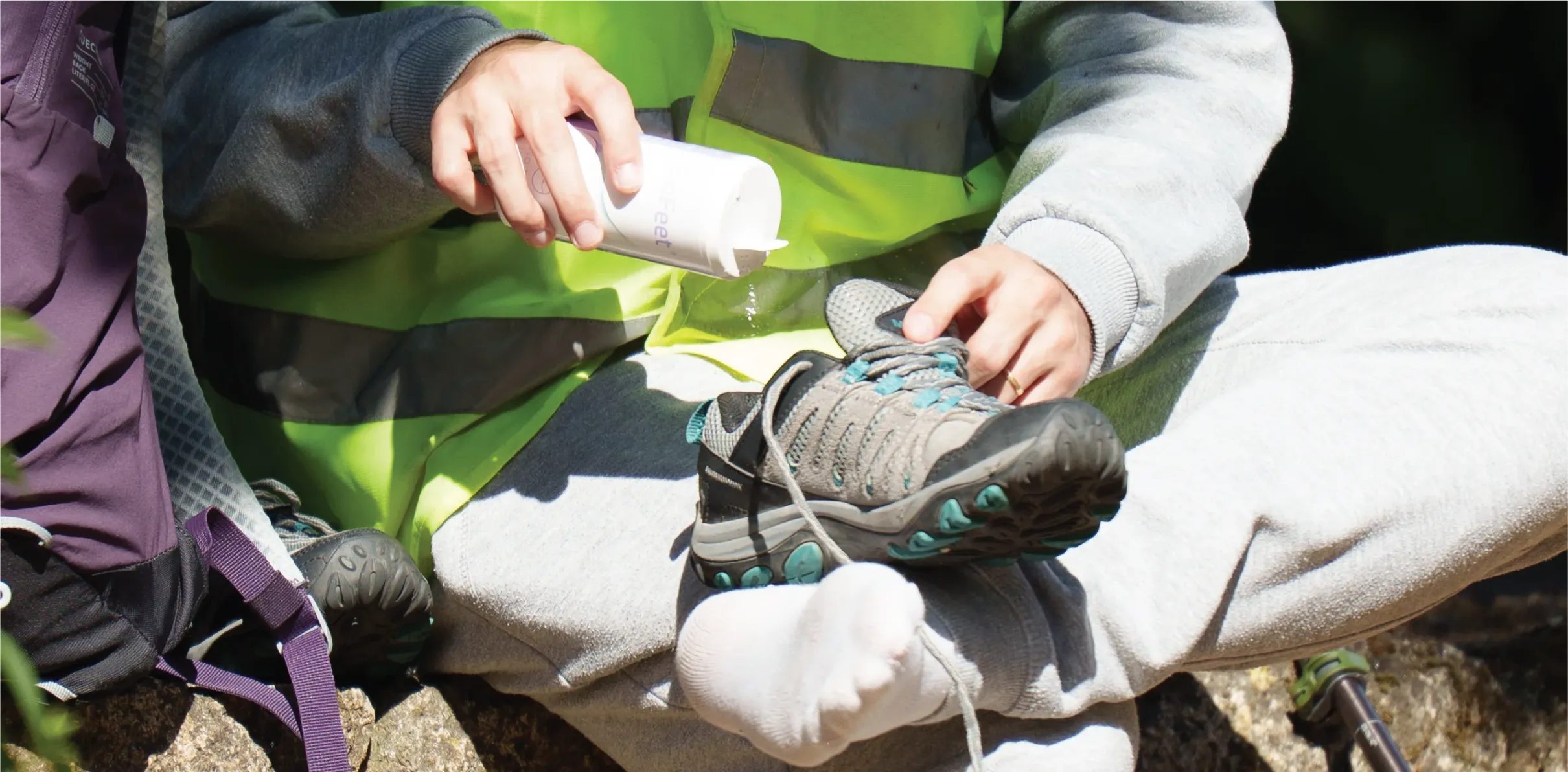
Walking long distances requires preparation, and the Feet play a central role in the whole experience. Continuous effort, combined with heat, perspiration and friction, can cause blisters, irritation and discomfort when adequate care is not taken.
Whether on a pilgrimage, a hiking route or a sports walk, preparation should begin before taking the first step. Choosing the right footwear, testing your socks, caring for the skin and gradually increasing the distance are measures that help reduce the risk of injury.
With a simple and consistent routine, it is possible to prepare, protect and recover the Feet throughout the entire route.
Blisters often result from repeated friction on the skin. During a long walk, heat and perspiration can increase moisture inside footwear, leaving the skin more vulnerable to rubbing.
The risk can also increase when:
A blister does not always appear suddenly. It often starts with a localized sensation of heat, burning or friction. Recognizing these signs allows you to protect the area before the injury develops.
The Feet should not be prepared only on the day of departure. In the weeks beforehand, it is important to gradually adapt the body to the effort and test all the elements that will be used.
Before a pilgrimage or demanding walk, do routes of different distances with the footwear and socks you intend to use.
This adaptation period helps identify pressure points, discomfort, excessive movement inside the footwear or difficulties that may worsen on a longer route.
If persistent pain arises during preparation, do not wait until the day of the walk to seek advice.
Footwear should be adapted to the shape of the Foot, without being worn to the point of losing stability or protection.
Before the walk, check that there is enough space in the toe area and that the heel remains stable. The Foot should not slide excessively inside the shoe, but it should not be compressed either.
New footwear should be used first on short routes, allowing you to assess how it fits.
Socks should fit the Foot without forming creases and should help manage perspiration. Avoid trying a new model on the day itself.
Take at least one extra pair in your backpack. Being able to change socks when they become damp can make a difference in controlling friction and comfort throughout the route.
Nails should be well cared for and kept at a length that does not cause repeated contact with the front of the footwear.
Avoid cutting nails too short or doing aggressive interventions immediately before the route. Small injuries to the skin or nails can become more uncomfortable during a long walk.
If you have thick, ingrown, fragile or painful nails, seek a Podologist’s assessment before departure.
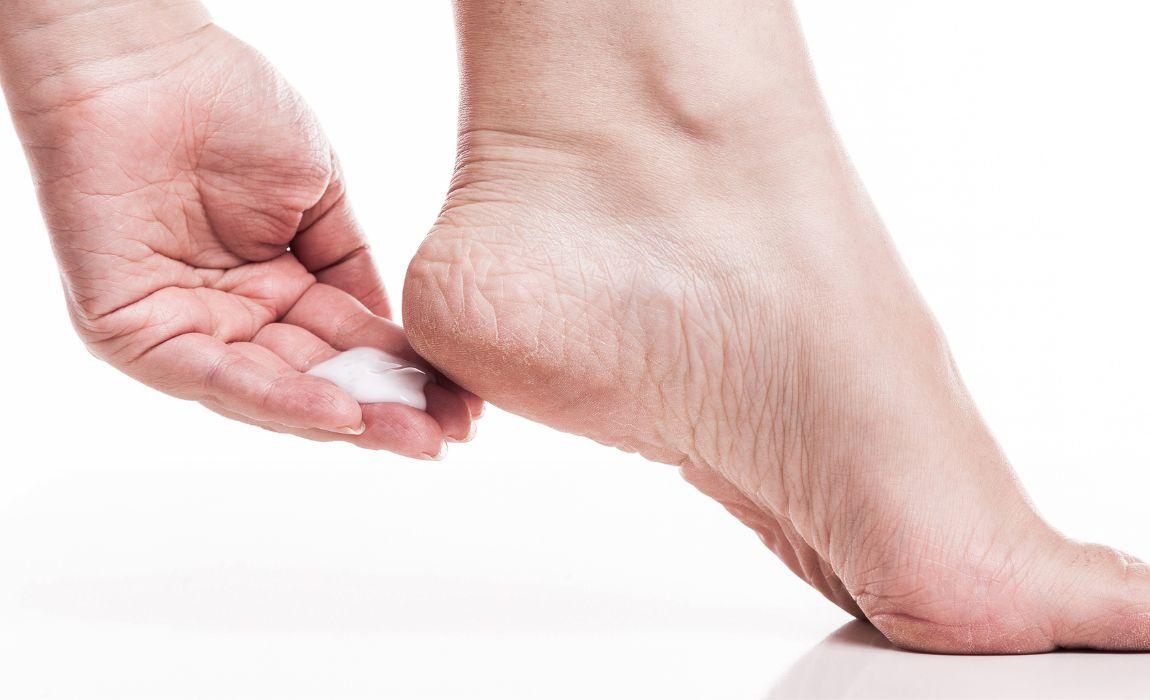
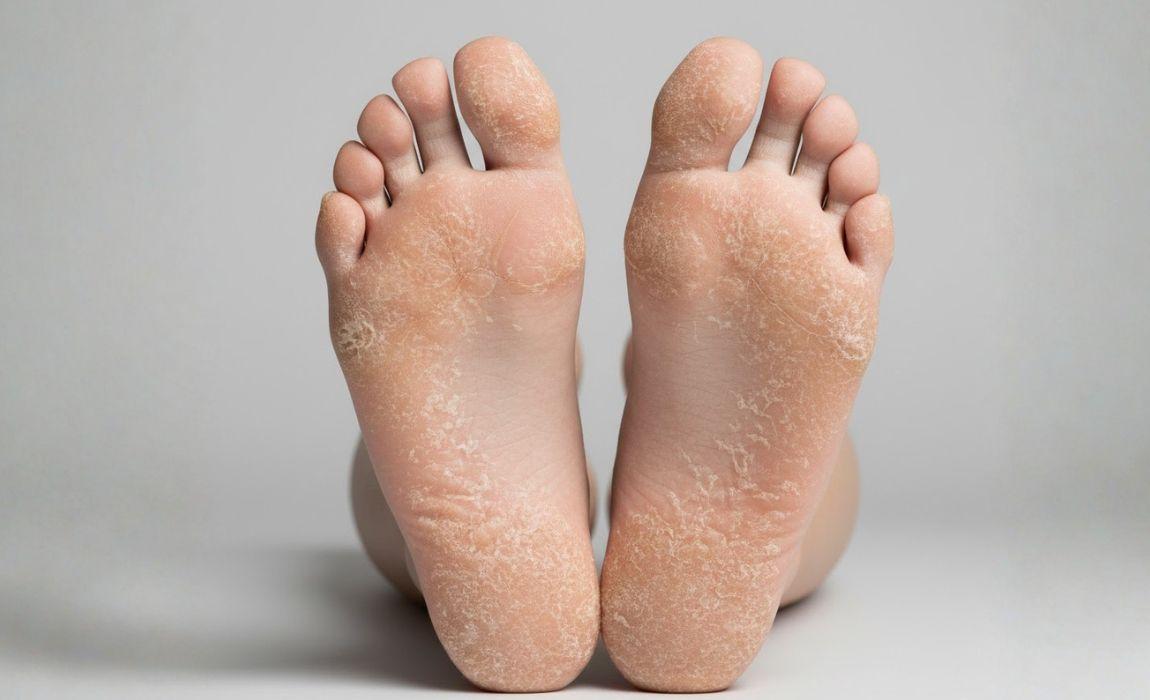
Check for cracks, flaking, itching, redness, wounds or painful calluses.
The skin should be cared for before being subjected to several hours of effort. When there is any change, the goal should not be to remove it aggressively, but to understand its origin and adopt appropriate care.
During the route, controlling moisture and friction should be a priority. Small adjustments made in time can prevent mild discomfort from developing into a blister or injury.
Perspiration during a walk is natural. However, moisture remaining inside footwear can leave the skin more susceptible to friction.
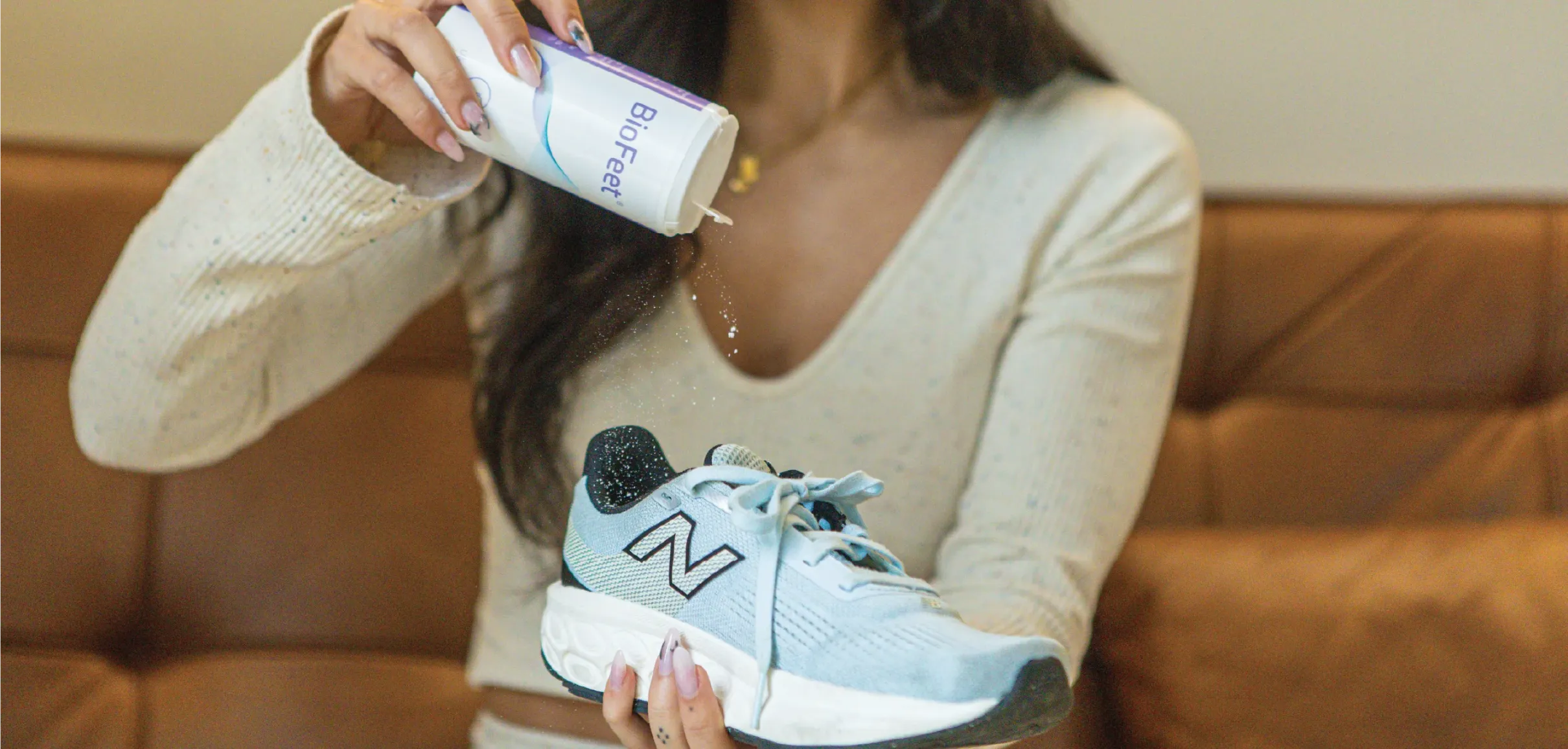
BioFeet® Powder BioFeet® Powder helps absorb excess moisture and control odor, talc-free.
It can be applied directly to the Feet, to socks or inside footwear, according to the instructions for use. By helping to control moisture, it helps reduce one of the factors associated with the onset of friction and discomfort.
Before putting on footwear, always make sure the Feet, including the spaces between the toes, are properly dry.
There is no need to wait until the end of the walk. If your socks are damp, change them during a break.
Before putting on the new pair, dry the Feet and check for any reddened, sensitive areas or areas with a sensation of heat.
Store damp socks separately, so you don’t transfer moisture to other items in your backpack.
Foot volume can change during a prolonged walk. Check the lace adjustment and make sure the footwear remains stable, without exerting excessive pressure.
On descents, it is especially important to prevent the toes from repeatedly hitting the front of the shoe.
If you feel burning, localized heat, pressure or pain, take a break and look at the area. Continuing to walk can worsen the injury.
A friction area can be protected with an appropriate dressing before a blister forms. Recommendations from the American Academy of Dermatology also highlight the importance of using well-fitted footwear, moisture-controlling socks and protection on problem areas.
If a blister appears, the goal is to protect the skin and avoid further irritation.
An intact blister should not be deliberately popped. It should be kept clean and protected with an appropriate dressing. If it bursts, do not remove the skin that remains over the area, as it helps protect the tissue.
Stop or adapt the walk if the pain is increasing. Seek professional support if you notice signs such as progressive redness, heat, swelling, discharge or intense pain.
People with diabetes, circulatory changes or reduced sensitivity should seek professional advice for any wound or blister on the Feet.
At the end of the day, remove footwear and socks and carefully observe the Feet. Check the soles, heels, the spaces between the toes and the nails.
The recovery routine may include:
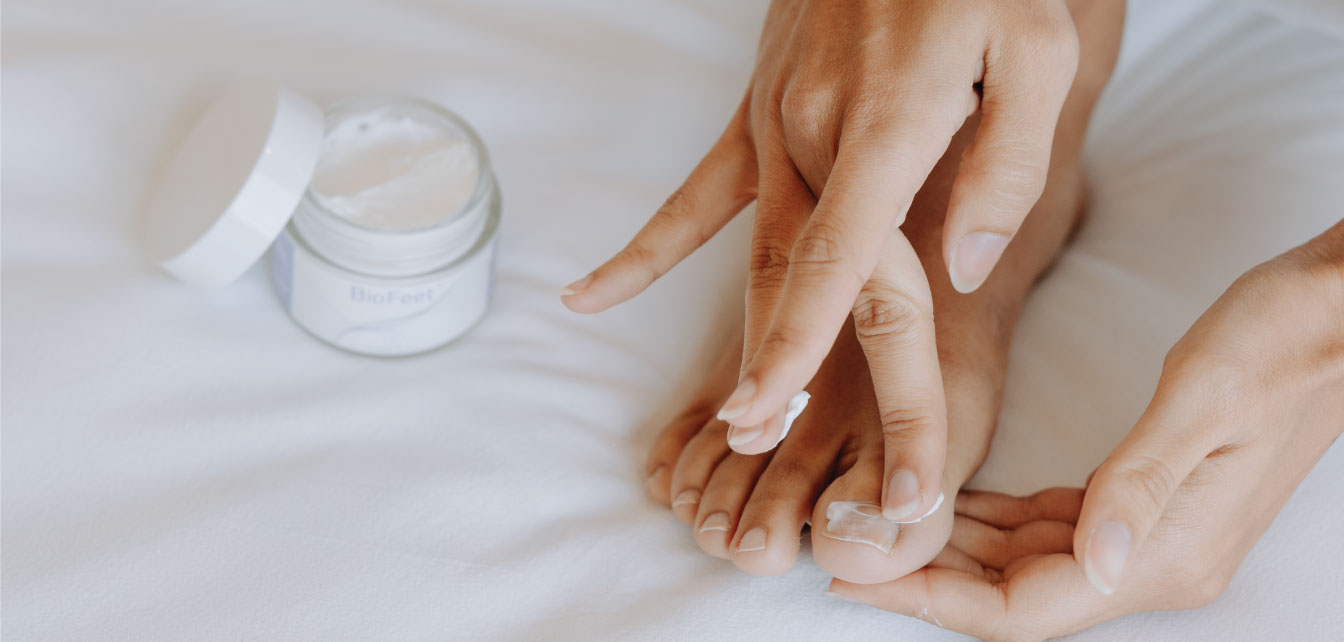
BioFeet® Foot Cream BioFeet® Foot Cream can be included in this routine through a gentle massage. Its nourishing and protective action helps care for skin subjected to daily effort.
Application should be done on intact skin and according to the product instructions, avoiding the spaces between the toes. Do not apply directly to open blisters or wounds.
A comfortable walk does not depend on a single gesture. Progressive preparation, moisture control, friction reduction and recovery at the end of each stage are complementary care measures.
These three moments help preserve the skin and identify changes before they interfere with the route:
Consistency is particularly important on a pilgrimage with several consecutive stages.
Before the walk, seek a professional assessment if there is pain when walking, ingrown nails, painful calluses, deep cracks or any change that may worsen with effort.
During or after the route, watch out for:
Find a Podologist near you and prepare the route according to your Feet’s needs.
Yes, whenever socks become damp or cause discomfort. Changing helps control moisture and reduce friction on the skin.
Some fatigue may arise after several hours of effort, but pain should not be seen as an unavoidable consequence of walking.
If the pain persists, increases or changes the way you walk, you should take a break and try to understand its origin.
BioFeet® Powder can be applied directly to the Feet, to socks or inside footwear, according to the instructions for use. Application should be adapted to perspiration and each person’s needs.
Because it has a nourishing and protective action, BioFeet® Foot Cream fits better into the care and recovery routine. Before starting the route, the Feet should be dry to avoid moisture and slipping inside footwear.
It is useful to take extra socks, appropriate dressings for friction areas or blisters, a small towel and a product to help control moisture.
On a long walk or pilgrimage, the condition of the Feet can influence the whole experience.
Preparing footwear and skin, controlling perspiration, acting on the first signs of friction and recovering at the end of the day helps make the route more comfortable and safe.
Care for your Feet before, during and after each stage.

Degree in Podiatry from CESPU
Degree in Nursing from the Instituto Superior de Saúde do Vale do Ave
Anatomical and Surgical Foot Dissection Course
Theoretical and Practical Posturology Course
PhD candidate in Biomedicine
Get early access to new products, routines and tips for looking after your feet.
Get early access to new products, routines and tips for looking after your feet.